

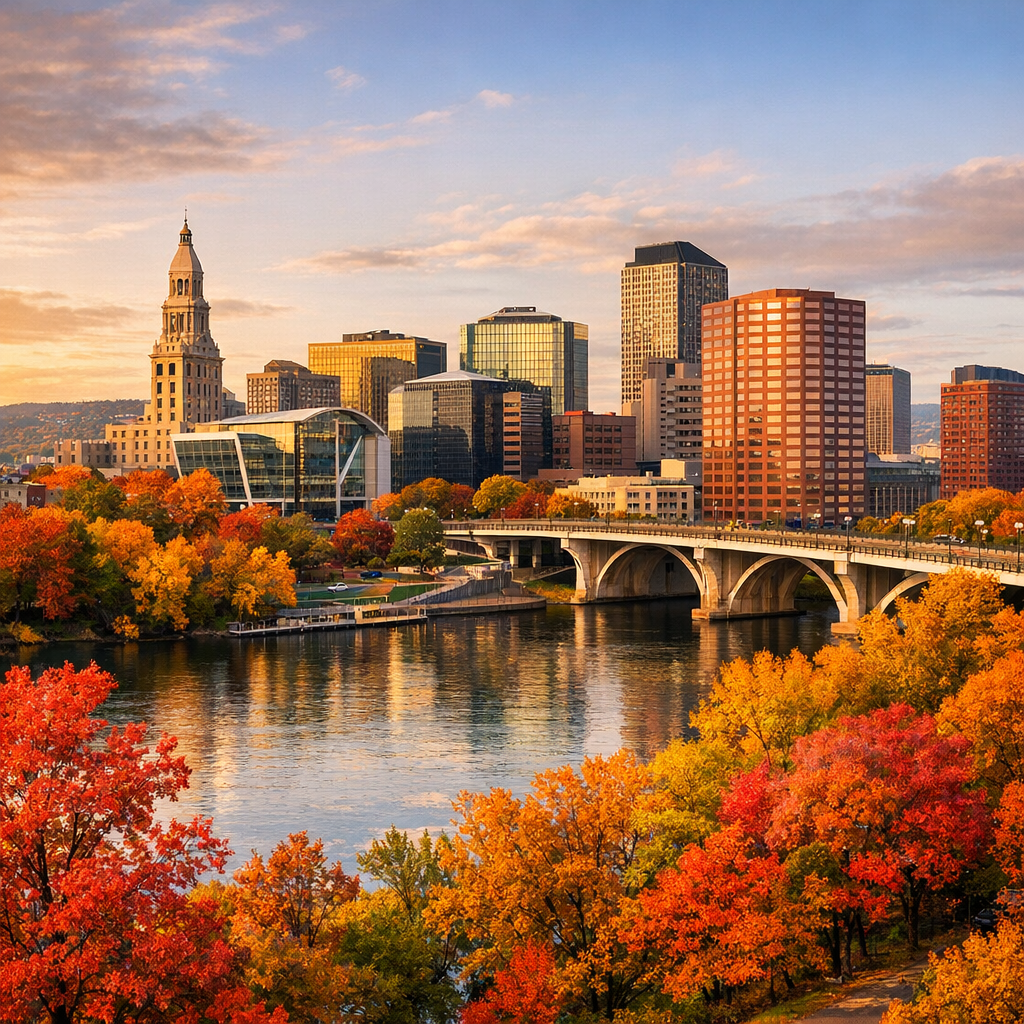
Hartford, Connecticut, experiences a diverse range of weather conditions throughout the year, characterized by four distinct seasons. Understanding these patterns can help residents and visitors prepare for the varying climates.
Spring (March to May)
Spring in Hartford brings a gradual warming trend. Average high temperatures increase from 47°F (8°C) in March to 71°F (22°C) in May. Correspondingly, low temperatures rise from 29°F (-2°C) to 50°F (10°C). Precipitation is moderate, with monthly averages ranging from 3.49 inches in March to 3.76 inches in April. This season is marked by blooming flora and longer daylight hours, making it ideal for outdoor activities.
Summer (June to August)
Summers are warm and humid. Average high temperatures peak at 85°F (29°C) in July, with lows around 65°F (18°C). Precipitation is relatively consistent, averaging about 4 inches per month. The combination of heat and humidity can lead to occasional thunderstorms. Residents often seek relief in shaded areas or by the Connecticut River.
Autumn (September to November)
Autumn features a gradual cooling. High temperatures decrease from 76°F (24°C) in September to 52°F (11°C) in November. Low temperatures follow suit, dropping from 56°F (13°C) to 34°F (1°C). Rainfall remains steady, averaging around 4 inches monthly. The season is renowned for its vibrant foliage, attracting many to local parks and scenic drives.
Winter (December to February)
Winters are cold, with average high temperatures ranging from 37°F (3°C) in January to 39°F (4°C) in February. Lows can dip to 21°F (-6°C). Snowfall is common, particularly in February, which averages 1.14 inches. Residents should prepare for icy conditions and shorter daylight hours during this season.
By understanding these seasonal patterns, Hartford’s community can better plan and adapt to the city’s dynamic climate.